












The Coronation of Serbian Tsar Stefan Dušan by Alphonse Mucha, 1923
Authentic artwork
The artwork we print is faithfully restored from the original source - usually a museum, auction house or private collection.
We never replace, redraw or invent the artist’s work using generative AI.
Christmas delivery & gifting

Send it straight to them
Add a gift message in your bag, then enter the recipient’s delivery address at checkout. We’ll print your message on a card. No prices are included in the parcel.
Delivery timing
Standard delivery is free worldwide and usually takes around 3 working days. Sending a gift abroad? We make most orders locally, in the recipient’s country.
Allow extra time for design and proof approval on personalised orders. See delivery details.
Returns: Standard orders can be returned or exchanged within 90 days of delivery. Personalised and custom-made pieces are generally excluded from change-of-mind returns. See our returns policy.
Black Friday Sale
Choose one item and get 20% off.
Choose two works and receive 30% off both. You can mix and match both maps and art.
No code is required. The offer is applied automatically.
Full terms and conditions
The Collector’s Offer applies to eligible works in standard made-to-order configurations. Bespoke sizes, personalised designs and commissioned work are excluded. Products with “personalised” or “custom” in their name are generally excluded.
The offer is administered as two separate automatic discounts: one for smaller formats and one for larger formats. To qualify, you must purchase two eligible works within the same format group. Maps and art prints may be mixed and matched within each group.
For example, two eligible A4 or 8 × 10 in prints qualify for 30% off both. One smaller-format print and one larger-format work do not qualify together, as items from different format groups cannot be combined to meet the two-item requirement.
No discount code is required. Any qualifying discount is applied automatically in your basket and at checkout.
Christmas schedule filling up. Order early.
Christmas orders & our workshop schedule
Our Christmas schedule is filling up, particularly for personalised maps and bespoke pieces. Ordering early allows time to prepare your artwork, complete any design approvals, and arrange printing and framing.
If your order requires a design preview, we’ll ask for your approval before printing. A prompt reply helps us keep your order moving through the workshop.
For standard maps and art prints, check the delivery estimate shown on the page. Larger framed orders travel more slowly through the logistics networks. Personalised and bespoke orders need time for design and approval.
Planning something more involved, or working to a particular deadline? Contact the workshop before ordering and we’ll help you check what’s possible.
Choose your size
Choose your finish


(More info)
Gift message & custom finish

If you want to add a gift message, or a finish (jigsaw, aluminium board, etc.) that is not available here, please request it in the "order note" when you check out.
Every order is custom made, so if you need the size adjusted slightly, or printed on an unusual material, just let us know. We've done thousands of custom orders over the years, so there's (almost) nothing we can't manage.
You can also contact us before you order, if you prefer!
- Made in the USA for fast, safe delivery
- Arrives perfect - or we replace it
-
Christmas delivery & gifting Christmas delivery & gifting
![View a full-size example of the printed gift message card]()
Send it straight to them
Add a gift message in your bag, then enter the recipient’s delivery address at checkout. We’ll print your message on a card. No prices are included in the parcel.
Delivery timing
Standard delivery is free worldwide and usually takes around 3 working days. Sending a gift abroad? We make most orders locally, in the recipient’s country.
Allow extra time for design and proof approval on personalised orders. See delivery details.
Returns: Standard orders can be returned or exchanged within 90 days of delivery. Personalised and custom-made pieces are generally excluded from change-of-mind returns. See our returns policy.
- Need help ordering?
In our customers’ words
More than 8,000 five-star reviews from around the world


Alphonse Mucha’s The Coronation of Serbian Tsar Stefan Dusan, painted in 1923, unfolds as a vast ceremonial pageant, dense with clergy, nobles,...
Continue readingAlphonse Mucha’s The Coronation of Serbian Tsar Stefan Dusan, painted in 1923, unfolds as a vast ceremonial pageant, dense with clergy, nobles, envoys and attendants. At its centre, Stefan Dušan advances in richly ornamented imperial regalia, the deep red and gold of his costume distinguishing him from the paler robes and crowded ranks around him. Rather than isolate the ruler in a conventional portrait of authority, Mucha embeds him within a broad procession whose banners, floral offerings and elaborate garments make power visible as public spectacle.
The scene follows Dušan’s coronation in 1346 as emperor of the Serbs and Greeks, transforming a medieval state occasion into an expansive work of national history. Mucha is widely associated with the elegant posters and decorative imagery he created in fin-de-siècle Paris, but Slavic history occupied a central place in his later career. This painting belongs to that more monumental aspect of his art: historical events are presented not as dry reconstructions, but as collective dramas shaped by pattern, rhythm and an Art Nouveau sensitivity to line.
A closer look
The composition stretches horizontally, allowing the eye to travel through successive groups of participants. In the foreground at the left, women in light-coloured dress carry flowers and wear distinctive headdresses. Their pale garments provide a visual pause amid the stronger reds, greens, purples and burnished golds of the procession. Behind them, densely assembled figures overlap in shallow layers, their differing costumes establishing rank and variety without breaking the movement of the crowd.
Dušan occupies the central middle distance in a commanding yet integrated position. Gold accents and ornate patterning articulate his robes, while the folds of the surrounding fabrics catch soft highlights and give weight to the figures. Faces register a range of responses, from solemn attention to open celebration. This variety prevents the gathering from becoming a uniform mass: Mucha turns the crowd into an accumulation of individual presences, each contributing to the ceremony’s scale.
Towards the right, clergy, nobles and attendants extend the procession, their vertical forms answered by standards and banners above. These fluttering shapes introduce movement into an otherwise stately arrangement. Partly obscured architecture anchors the gathering in a medieval setting, while changes in figure size carry the scene gradually into depth. The result is both crowded and carefully controlled—a tapestry-like field in which patterned clothing, ceremonial objects and repeated gestures hold the many participants together.
Context and significance
Mucha’s treatment of the coronation reflects his enduring interest in the shared histories and cultural identities of the Slavic peoples. Although his decorative language had been formed within the international culture of Art Nouveau, here its flowing contours and ornamental detail are placed in the service of historical narrative. Costume is not incidental embellishment: its colour, texture and hierarchy help explain the political reach and magnificence of Dušan’s court.
The painting also reveals a less familiar side of Mucha. The graceful line for which he became celebrated remains present, particularly in the silhouettes, fabrics and clustered figures, but it operates on a markedly different scale from his commercial poster designs. Public history replaces theatrical publicity; the single, immediately legible figure gives way to a populous panorama. That tension between decorative coherence and historical complexity is what gives the coronation its distinctive character: a medieval procession rendered with the visual richness of a pageant and the compositional discipline of a master designer.
Choosing the right size and finish
Artwork can feel intimate at smaller sizes and dramatically more architectural at larger ones. Use the room preview, model image and size guide to see how the proportions and scale will work in your space.
If you need an exact size, specialist framing or help planning a larger display, ask our workshop for advice.
The model in the listing images is holding the 16x20in (40x50cm) version of this art print.
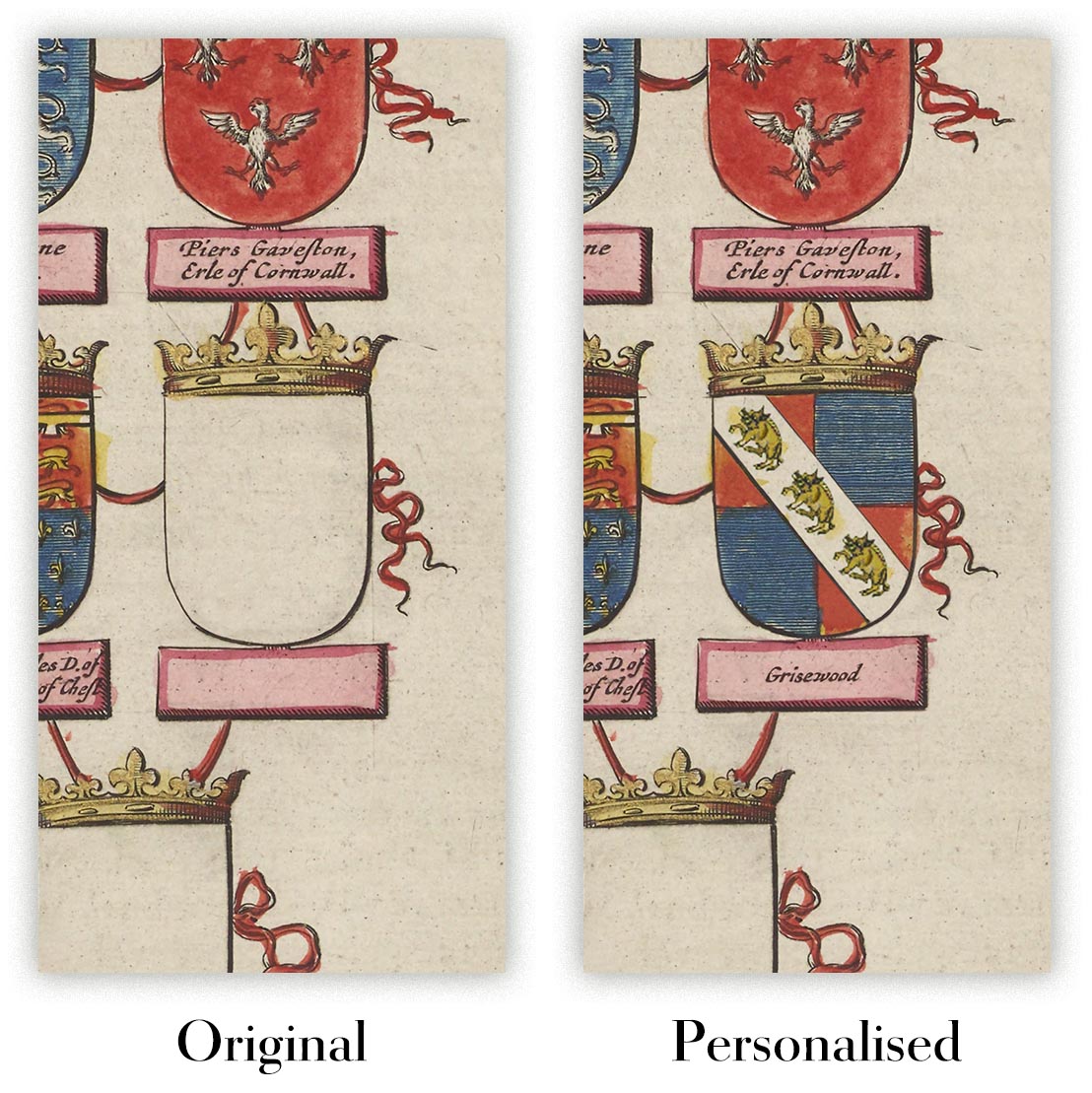
Where personalisation is available, you can add a short title or dedication, or one considered visual detail. See examples of personalised artwork.
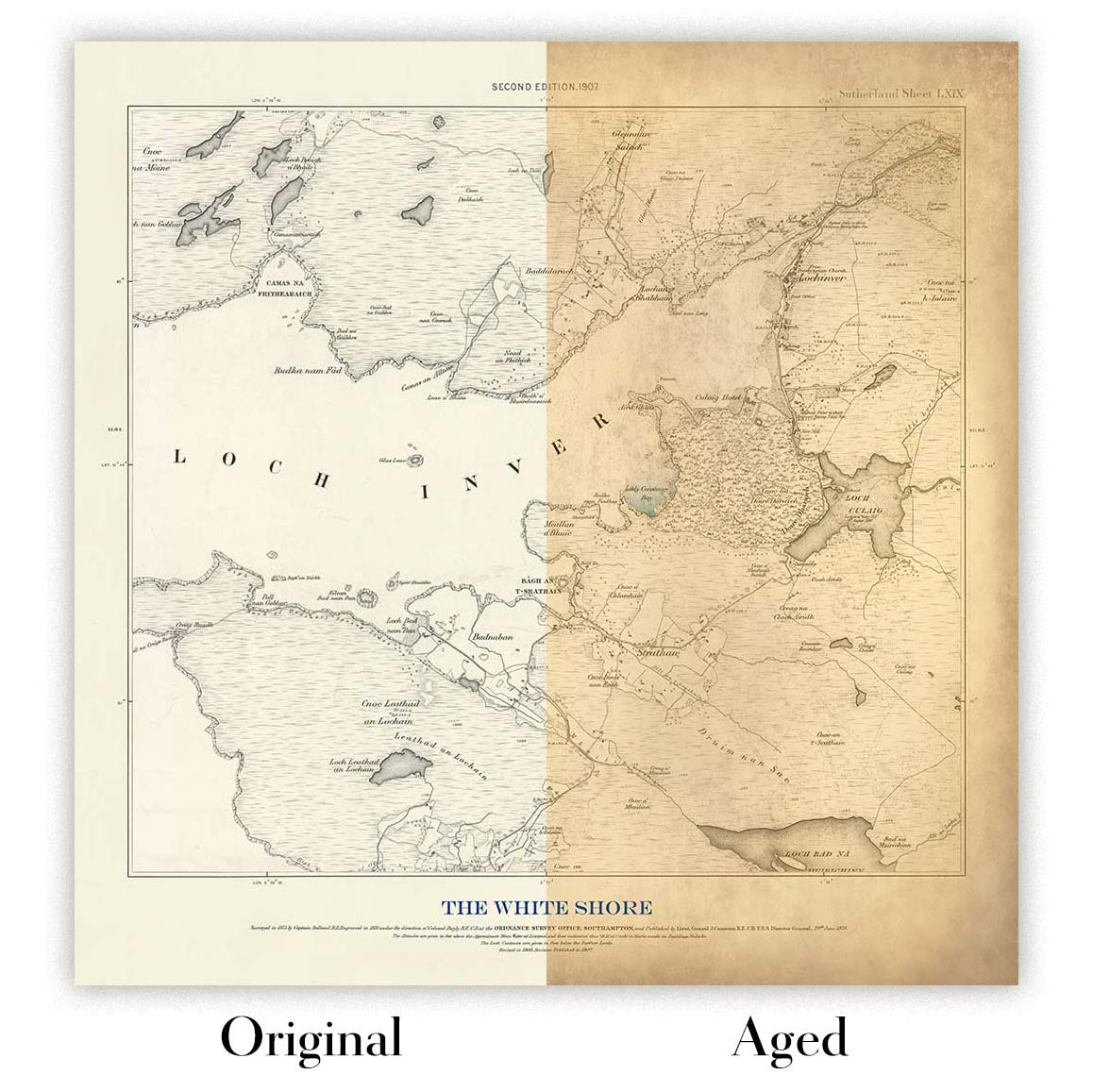
Choose Original to retain the colour and character of the source artwork, or Aged for a warmer, more antique appearance. See examples of our Aged artwork.
Every piece is produced to archival standards using fade-resistant pigment inks on acid-free matte art paper. Choose an art print, framed art print or framed canvas using the finish options above.
Framed art prints use crystal-clear optical acrylic for excellent clarity, lower weight and safer delivery than glass. Each piece arrives professionally framed and ready to hang.
Selected artworks can be produced at statement sizes up to 3 metres (10ft). Custom sizing and specialist framing are also available. If the exact option you need is not listed, contact our workshop.
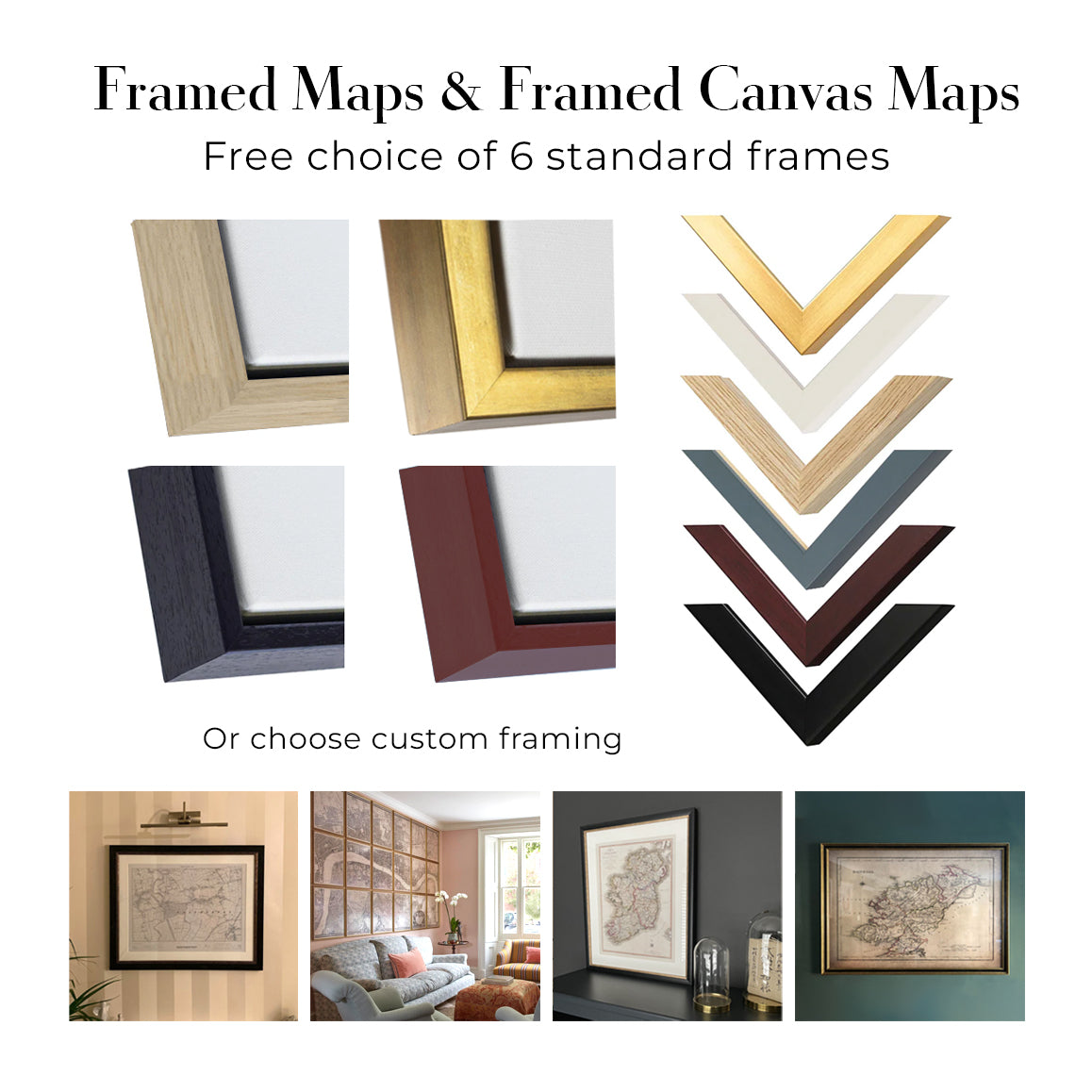
This artwork is also available as a float framed canvas, sometimes known as a shadow gap framed canvas or canvas floater. The work is printed on artist's cotton canvas and then stretched over a handmade box frame. We then "float" the canvas inside a wooden frame, which is available in a range of colours (black, dark brown, oak, antique gold and white). This is a wonderful way to present an art print without glazing in front. See some examples of float framed canvas art and explore the differences between my different finishes.
Alphonse Mucha’s The Coronation of Serbian Tsar Stefan Dusan, painted in 1923, unfolds as a vast ceremonial pageant, dense with clergy, nobles, envoys and attendants. At its centre, Stefan Dušan advances in richly ornamented imperial regalia, the deep red and gold of his costume distinguishing him from the paler robes and crowded ranks around him. Rather than isolate the ruler in a conventional portrait of authority, Mucha embeds him within a broad procession whose banners, floral offerings and elaborate garments make power visible as public spectacle.
The scene follows Dušan’s coronation in 1346 as emperor of the Serbs and Greeks, transforming a medieval state occasion into an expansive work of national history. Mucha is widely associated with the elegant posters and decorative imagery he created in fin-de-siècle Paris, but Slavic history occupied a central place in his later career. This painting belongs to that more monumental aspect of his art: historical events are presented not as dry reconstructions, but as collective dramas shaped by pattern, rhythm and an Art Nouveau sensitivity to line.
A closer look
The composition stretches horizontally, allowing the eye to travel through successive groups of participants. In the foreground at the left, women in light-coloured dress carry flowers and wear distinctive headdresses. Their pale garments provide a visual pause amid the stronger reds, greens, purples and burnished golds of the procession. Behind them, densely assembled figures overlap in shallow layers, their differing costumes establishing rank and variety without breaking the movement of the crowd.
Dušan occupies the central middle distance in a commanding yet integrated position. Gold accents and ornate patterning articulate his robes, while the folds of the surrounding fabrics catch soft highlights and give weight to the figures. Faces register a range of responses, from solemn attention to open celebration. This variety prevents the gathering from becoming a uniform mass: Mucha turns the crowd into an accumulation of individual presences, each contributing to the ceremony’s scale.
Towards the right, clergy, nobles and attendants extend the procession, their vertical forms answered by standards and banners above. These fluttering shapes introduce movement into an otherwise stately arrangement. Partly obscured architecture anchors the gathering in a medieval setting, while changes in figure size carry the scene gradually into depth. The result is both crowded and carefully controlled—a tapestry-like field in which patterned clothing, ceremonial objects and repeated gestures hold the many participants together.
Context and significance
Mucha’s treatment of the coronation reflects his enduring interest in the shared histories and cultural identities of the Slavic peoples. Although his decorative language had been formed within the international culture of Art Nouveau, here its flowing contours and ornamental detail are placed in the service of historical narrative. Costume is not incidental embellishment: its colour, texture and hierarchy help explain the political reach and magnificence of Dušan’s court.
The painting also reveals a less familiar side of Mucha. The graceful line for which he became celebrated remains present, particularly in the silhouettes, fabrics and clustered figures, but it operates on a markedly different scale from his commercial poster designs. Public history replaces theatrical publicity; the single, immediately legible figure gives way to a populous panorama. That tension between decorative coherence and historical complexity is what gives the coronation its distinctive character: a medieval procession rendered with the visual richness of a pageant and the compositional discipline of a master designer.
Choosing the right size and finish
Artwork can feel intimate at smaller sizes and dramatically more architectural at larger ones. Use the room preview, model image and size guide to see how the proportions and scale will work in your space.
If you need an exact size, specialist framing or help planning a larger display, ask our workshop for advice.
The model in the listing images is holding the 16x20in (40x50cm) version of this art print.
Where personalisation is available, you can add a short title or dedication, or one considered visual detail. See examples of personalised artwork.
Choose Original to retain the colour and character of the source artwork, or Aged for a warmer, more antique appearance. See examples of our Aged artwork.
Every piece is produced to archival standards using fade-resistant pigment inks on acid-free matte art paper. Choose an art print, framed art print or framed canvas using the finish options above.
Framed art prints use crystal-clear optical acrylic for excellent clarity, lower weight and safer delivery than glass. Each piece arrives professionally framed and ready to hang.
Selected artworks can be produced at statement sizes up to 3 metres (10ft). Custom sizing and specialist framing are also available. If the exact option you need is not listed, contact our workshop.
This artwork is also available as a float framed canvas, sometimes known as a shadow gap framed canvas or canvas floater. The work is printed on artist's cotton canvas and then stretched over a handmade box frame. We then "float" the canvas inside a wooden frame, which is available in a range of colours (black, dark brown, oak, antique gold and white). This is a wonderful way to present an art print without glazing in front. See some examples of float framed canvas art and explore the differences between my different finishes.
Many of our maps and art prints are chosen as thoughtful gifts for homes, offices, studies and meaningful places.
Choose a framed option for the easiest ready-to-hang gift, or choose an unframed print if the recipient may prefer to select their own frame.
We make orders locally in 24 countries around the world, so gifts can often be produced close to the recipient. This helps them arrive faster, travel more safely, and avoid customs or import duty surprises.
- We can deliver directly to the recipient. No price info is included.
- A gift message can be added to your order. We'll print it on a nice card.
- Framed pieces arrive ready to hang
- Unframed prints are carefully packed in a strong protective tube
- Almost every order is made locally, for faster, safer gifting
- 90-day returns give the recipient time to decide
If you are not sure what to choose, please contact us. We can help you pick the right map, size, finish or delivery option.
Most orders are made locally and delivered in around 2–3 working days, depending on the product, size and destination.
We print and frame maps and artwork in 24 countries around the world, so your order is usually made close to you or your recipient. That means faster delivery, less time in transit, and no customs or import duty surprises.
Personalised and customised pieces usually take an extra 1–2 working days, because we prepare your design and send it to you for approval before printing.
Very large framed orders can take a little longer, as they need extra care in production and delivery.
Every order is carefully packaged: unframed prints are sent in a strong protective tube, while framed pieces are securely packed with protective materials around the frame.
If you need your order by a particular date, please contact us before ordering. We’ll check the best production route and delivery option for your location.
Express delivery is available at checkout for most countries. Next-day delivery is available in the UK, US, Singapore and the UAE.
Your order is covered by our 90-day returns policy and 10-year guarantee.
Our standard frame is a gallery-style black ash hardwood frame, with a simple, modern look. It is approximately 20mm (0.8in) wide. You can also view some lovely customer photos of framed maps and art.
We use super-clear acrylic glazing, also known as Perspex or Acrylite, instead of traditional glass. It is lighter, safer, and has lower reflectivity, giving the artwork a clearer, cleaner appearance.
Six standard frame colours are available at no extra cost: black, dark brown, dark grey, oak, white, and antique gold. Custom framing and mounting/matting is also available for customers looking for something more specific.
Most maps, art prints, and illustrations are also available as a framed canvas. We use matte cotton canvas, stretch it over a sustainably sourced wooden box frame, and then float the piece within a wooden outer frame. The finished result is beautifully presented, with no glazing between you and the artwork.
All frames are supplied ready to hang, with either string or brackets fitted to the back. Very large frames will include heavy-duty hanging plates and/or a mounting baton. If you have any questions, please get in touch.
We can also supply old maps and artwork on canvas, foam board, cotton rag, and other materials.
If you would prefer to frame your map or artwork yourself, please read our size guide before ordering.
We work with interior designers, hospitality businesses, property professionals, offices and corporate buyers on individual pieces and larger coordinated projects.
This artwork can be adapted for a particular wall, room or project, and our workshop can help coordinate the dimensions, material and framing before production.
- Exact, oversized and made-to-measure dimensions
- Custom framing, mounting and alternative materials
- Coordinated pieces for several rooms or locations
- Art personalisation, to adjust the colour and style of the piece
- Art and framing guidance from our workshop
- Local production for projects around the world
Every restored art print begins with the original artist’s work—never an AI-generated replacement.
Our London studio works from carefully selected source material from museums, libraries, archives and private collections. We restore age-related damage, faded colour and imperfect reproduction while preserving the artist’s composition, brushwork, line, texture and period character.
We do not use generative AI to redraw, reinterpret or invent the artwork. Digital restoration is used only to recover and reproduce the original work as faithfully as possible.
Once restored, the master artwork is prepared for your chosen size and finish. Your piece is then printed and, where selected, framed close to its delivery destination.
Our giclée art prints use acid-free 200gsm archival matte paper and fade-resistant pigment inks for a rich, museum-quality finish. Framed art prints use crystal-clear optical acrylic and arrive ready to hang.
Framed canvas and specialist cotton-rag editions are also available. Learn more about our materials and finishes.
We’ve been restoring and producing maps and art prints since 1984, and we stand behind every piece.
Every order is covered by our 10-year guarantee and damage-free delivery guarantee. If your piece arrives damaged, we’ll replace or remake it free of charge. If anything else isn’t right, contact our workshop team and we’ll put it right promptly.
See our returns and refund policy for full details.


