














Rare Old Map of the Moon by Moreux, 1949: Relief, Maria & Impact Craters, Inverted N-S
Restored in our London workshop from the original 1949 map and printed to museum-grade archival standards. Full description
The Collector’s Offer
Choose two eligible works and receive 20% off both. Choose three and the lowest-priced one is complimentary, a maximum saving of 33%.
Mix and match eligible standard maps and fine-art prints. No code is required; the offer is applied automatically at checkout.
Standard made-to-order configurations are included. Bespoke sizes, personalised designs and commissioned work are excluded.
Need delivery to different addresses? Contact us before ordering.The Collector’s Offer
Choose two eligible works and receive 20% off both. Choose three and the lowest-priced one is complimentary, a maximum saving of 33%.
Mix and match eligible standard maps and fine-art prints. No code is required; the offer is applied automatically at checkout.
Standard made-to-order configurations are included. Bespoke sizes, personalised designs and commissioned work are excluded.
Need delivery to different addresses? Contact us before ordering. Restored in London • Printed and framed in the USA

Restored from the original 1949 map and printed to museum-grade archival standards. Full description
Choose your size
Choose your finish


(More info)
Gift message & custom finish

If you want to add a gift message, or a finish (jigsaw, aluminium board, etc.) that is not available here, please request it in the "order note" when you check out.
Every order is custom made, so if you need the size adjusted slightly, or printed on an unusual material, just let us know. We've done thousands of custom orders over the years, so there's (almost) nothing we can't manage.
You can also contact us before you order, if you prefer!
Own a piece of history
8,000+ five-star reviews


Théophile Moreux’s 1949 Carte de la Lune is a masterclass in mid-century lunar cartography: a chromolithographic portrait of the Moon’s Earth-facing hemisphere...
Continue readingThéophile Moreux’s 1949 Carte de la Lune is a masterclass in mid-century lunar cartography: a chromolithographic portrait of the Moon’s Earth-facing hemisphere that fuses rigorous observation with luminous design. Its principal subjects are the maria and highlands, the summits and basins, and the great impact scars that narrate the Moon’s history. Moreux distills a complex three-dimensional world into an intelligible, elegant infographic, inviting the viewer to read relief as readily as text. The map is especially intriguing for how it frames pre-space-age knowledge—when only 59% of the lunar surface had been systematically charted—capturing both the certainty of well-known features and the tantalizing ambiguity at the edges of observation.
The legend of this map is written in color and contour. Yellow tints signal elevation across ramparts, ranges, and crater rims, while cool blues mark depressions—subtle gradations that turn light and shade into measurable structure. Fine topographic lines trace major summits and impact craters, sharpening the distinction between uplifted highlands and basaltic plains. Against this backdrop, the Sea of Tranquility (Mer de la Tranquillité) and the Ocean of Storms (Ocean des Tempêtes) emerge as vast sheets of solidified lava, their calm palettes belying volcanic origins. The result is a visual grammar that makes the Moon’s morphology instantly legible: craters become timelines; seas, geological episodes; and contours, the very sentences of lunar relief.
Orientation becomes an intellectual exercise in Moreux’s hands. North and south are deliberately inverted, while east and west remain true—an observational compromise that mirrors the vantage and conventions of telescopic study. This unusual perspective invites the viewer to inhabit the astronomer’s eyepiece, where foreshortening and libration complicate simple mapping. At the southern pole, Moreux highlights the Doerfel Range, poised within the rim of a vast impact crater and bathed in enduring light—an arresting reminder that polar topography modulates illumination in extreme ways. Such choices reveal a cartographer attentive not only to where features are, but to how they appear, shifting with geometry, sunlight, and the limits of mid-century optics.
Nomenclature becomes narrative across the surface. Familiar mares—Mer de la Sérénité, Mer des Pluies, Mer des Crises, Mer des Vapeurs, Mer des Humeurs, and the evocative Golfo de la Mort—dot the disc like chapters in a chronicle of fire and impact. Labeled craters punctuate these plains and highlands, offering anchor points for both amateur stargazers and professional selenographers. By coupling poetic place-names with precise symbology, the map bridges myth and metric, making an austere celestial body invitingly human. That blend reflects Moreux’s broader preoccupations: education, popular science, and a curiosity about extraterrestrial life—threads that run through his lunar and Martian studies and animate this chart with intellectual reach.
As a scientific tool and cultural artifact, Moreux’s Moon compresses an era’s knowledge with rare clarity. Created on the cusp of space exploration, it captures the best of Earth-based astronomy just before spacecraft redefined the possible. Its disciplined use of color-coding and contour foreshadows later photogrammetric relief maps, while its lucid labeling sustains lasting pedagogical value. Moreux’s legacy—honored by an asteroid and a Martian crater bearing his name—resonates in this work: a map that invites contemplation as much as consultation. It is a portrait of the Moon and of an astronomer’s mind at once—precise, speculative, and irresistibly illuminating.
Places on this map
- Mer des Humeurs (Sea of Moods)
- Mer de la Sérénité (Sea of Serenity)
- Mer des Pluies (Sea of Rains)
- Mer des Vapeurs (Sea of Vapors)
- Mer des Crises (Sea of Crises)
- Mer de la Tranquillité (Sea of Tranquility)
- Ocean des Tempêtes (Ocean of Storms)
- Golfo de la Mort (Gulf of Death)
- Several Impact Craters: Not named here individually but depicted prominently on the map.
Notable Features & Landmarks
- Doerfel Range
- Craters: Various labeled craters, highlighted for significance.
- Topographic Lines
- Regions: Various seas and landforms are detailed with names indicating their topographical significance.
Historical and design context
- Year Created: 1949
- Mapmaker: Théophile Moreaux, an esteemed author and astronomer (1867-1954).
- Map Description: A fascinating chromolithograph depicting a detailed lunar landscape, showcasing both well-known and lesser-known features of the moon.
- Visibility: Represents the visible hemisphere from Earth; only 59% of the moon was systematically charted before space exploration.
- Color Coding: Uses a color-coded system where yellow indicates elevation and blue denotes depressions.
- Topographic Lines: Utilized to outline major summits and impact craters, enhancing clarity.
- Inversion of Lunar Poles: North and south poles are swapped, while east and west remain accurate; this requires observation from an unusual perspective.
- Themes: Explores concepts of extraterrestrial life and the mysteries of space; reflects Moreaux’s fascination with lunar and Martian studies.
- Cultural Impact: The map serves as both a scientific tool and an educational piece, accentuating Moreaux's legacy in astronomy and popular science.
- Historical Significance: Reflects early astronomical studies and cultural perceptions of space during Moreaux's lifetime.
- Recognition: An asteroid and a Martian crater were named in honor of Moreaux posthumously.
Please double check the images to make sure that a specific town or place is shown on this map. You can also get in touch and ask us to check the map for you.
This map looks great at every size, but I always recommend going for a larger size if you have space. That way you can easily make out all of the details.
This map looks amazing at sizes all the way up to 100in (250cm). If you are looking for a larger map, please get in touch.
The model in the listing images is holding the 16x20in (40x50cm) version of this map.
The fifth listing image shows an example of my map personalisation service.
If you’re looking for something slightly different, check out my collection of the best old maps to see if something else catches your eye.
Please contact me to check if a certain location, landmark or feature is shown on this map.
This would make a wonderful birthday, Christmas, Father's Day, work leaving, anniversary or housewarming gift for someone from the areas covered by this map.
This map is available as a giclée print on acid free archival matte paper, or you can buy it framed. The frame is a nice, simple black frame that suits most aesthetics. Please get in touch if you'd like a different frame colour or material. My frames are glazed with super-clear museum-grade acrylic (perspex/acrylite), which is significantly less reflective than glass, safer, and will always arrive in perfect condition.
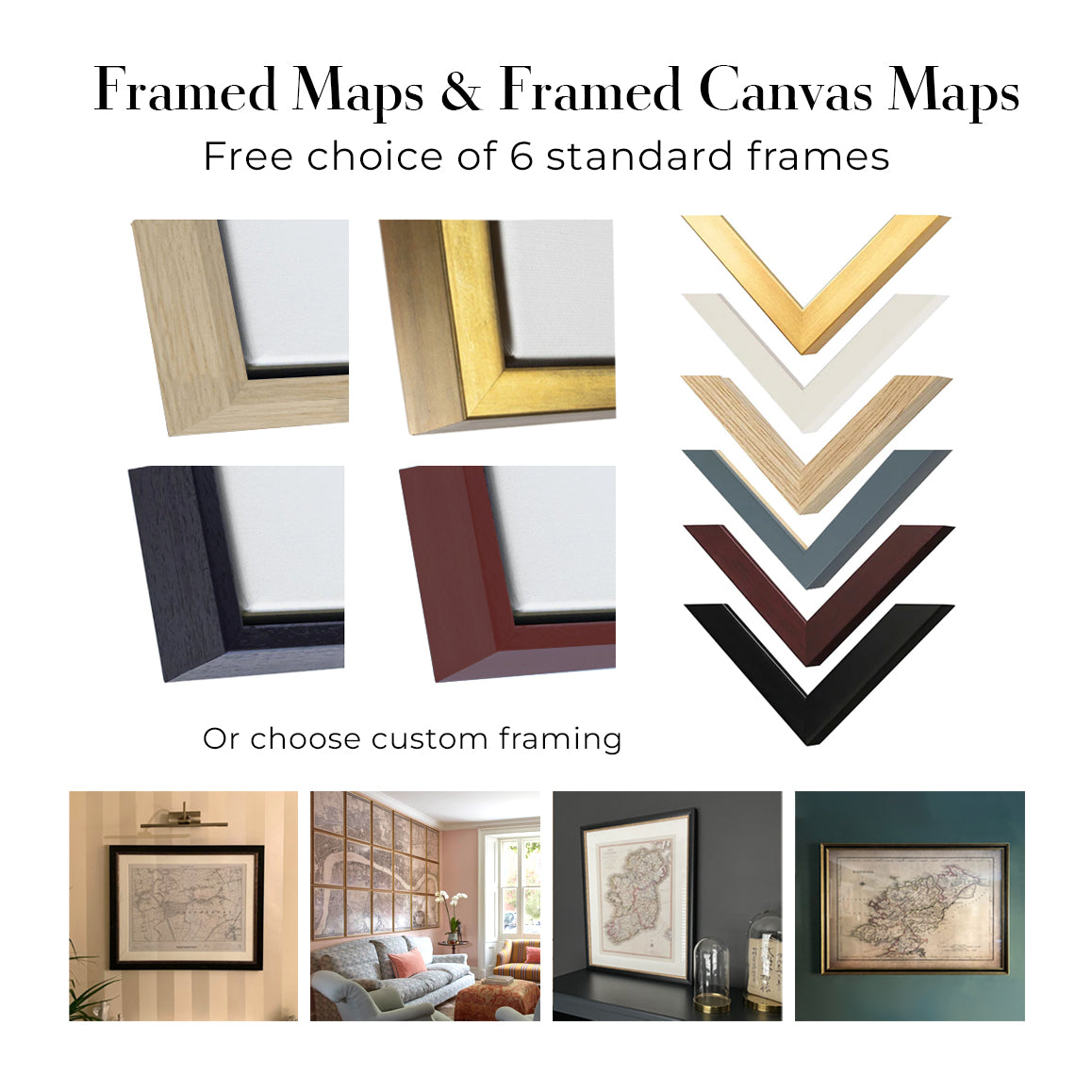
This map is also available as a float framed canvas, sometimes known as a shadow gap framed canvas or canvas floater. The map is printed on artist's cotton canvas and then stretched over a handmade box frame. We then "float" the canvas inside a wooden frame, which is available in a range of colours (black, dark brown, oak, antique gold and white). This is a wonderful way to present a map without glazing in front. See some examples of float framed canvas maps and explore the differences between my different finishes.
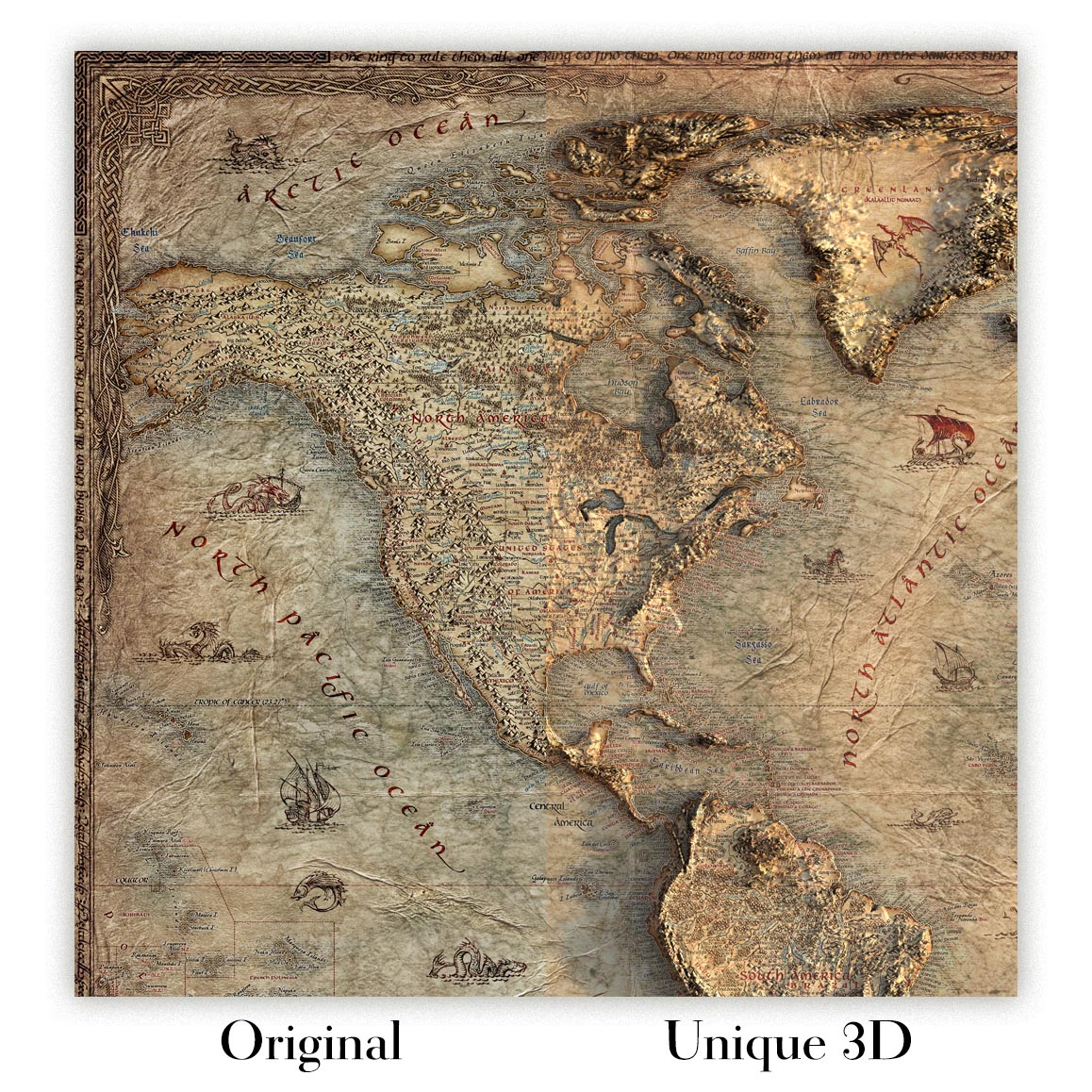
For something truly unique, this map is also available in "Unique 3D", our trademarked process that dramatically transforms the map so that it has a wonderful sense of depth. We combine the original map with detailed topography and elevation data, so that mountains and the terrain really "pop". For more info and examples of 3D maps, check my Unique 3D page.
Théophile Moreux’s 1949 Carte de la Lune is a masterclass in mid-century lunar cartography: a chromolithographic portrait of the Moon’s Earth-facing hemisphere that fuses rigorous observation with luminous design. Its principal subjects are the maria and highlands, the summits and basins, and the great impact scars that narrate the Moon’s history. Moreux distills a complex three-dimensional world into an intelligible, elegant infographic, inviting the viewer to read relief as readily as text. The map is especially intriguing for how it frames pre-space-age knowledge—when only 59% of the lunar surface had been systematically charted—capturing both the certainty of well-known features and the tantalizing ambiguity at the edges of observation.
The legend of this map is written in color and contour. Yellow tints signal elevation across ramparts, ranges, and crater rims, while cool blues mark depressions—subtle gradations that turn light and shade into measurable structure. Fine topographic lines trace major summits and impact craters, sharpening the distinction between uplifted highlands and basaltic plains. Against this backdrop, the Sea of Tranquility (Mer de la Tranquillité) and the Ocean of Storms (Ocean des Tempêtes) emerge as vast sheets of solidified lava, their calm palettes belying volcanic origins. The result is a visual grammar that makes the Moon’s morphology instantly legible: craters become timelines; seas, geological episodes; and contours, the very sentences of lunar relief.
Orientation becomes an intellectual exercise in Moreux’s hands. North and south are deliberately inverted, while east and west remain true—an observational compromise that mirrors the vantage and conventions of telescopic study. This unusual perspective invites the viewer to inhabit the astronomer’s eyepiece, where foreshortening and libration complicate simple mapping. At the southern pole, Moreux highlights the Doerfel Range, poised within the rim of a vast impact crater and bathed in enduring light—an arresting reminder that polar topography modulates illumination in extreme ways. Such choices reveal a cartographer attentive not only to where features are, but to how they appear, shifting with geometry, sunlight, and the limits of mid-century optics.
Nomenclature becomes narrative across the surface. Familiar mares—Mer de la Sérénité, Mer des Pluies, Mer des Crises, Mer des Vapeurs, Mer des Humeurs, and the evocative Golfo de la Mort—dot the disc like chapters in a chronicle of fire and impact. Labeled craters punctuate these plains and highlands, offering anchor points for both amateur stargazers and professional selenographers. By coupling poetic place-names with precise symbology, the map bridges myth and metric, making an austere celestial body invitingly human. That blend reflects Moreux’s broader preoccupations: education, popular science, and a curiosity about extraterrestrial life—threads that run through his lunar and Martian studies and animate this chart with intellectual reach.
As a scientific tool and cultural artifact, Moreux’s Moon compresses an era’s knowledge with rare clarity. Created on the cusp of space exploration, it captures the best of Earth-based astronomy just before spacecraft redefined the possible. Its disciplined use of color-coding and contour foreshadows later photogrammetric relief maps, while its lucid labeling sustains lasting pedagogical value. Moreux’s legacy—honored by an asteroid and a Martian crater bearing his name—resonates in this work: a map that invites contemplation as much as consultation. It is a portrait of the Moon and of an astronomer’s mind at once—precise, speculative, and irresistibly illuminating.
Places on this map
- Mer des Humeurs (Sea of Moods)
- Mer de la Sérénité (Sea of Serenity)
- Mer des Pluies (Sea of Rains)
- Mer des Vapeurs (Sea of Vapors)
- Mer des Crises (Sea of Crises)
- Mer de la Tranquillité (Sea of Tranquility)
- Ocean des Tempêtes (Ocean of Storms)
- Golfo de la Mort (Gulf of Death)
- Several Impact Craters: Not named here individually but depicted prominently on the map.
Notable Features & Landmarks
- Doerfel Range
- Craters: Various labeled craters, highlighted for significance.
- Topographic Lines
- Regions: Various seas and landforms are detailed with names indicating their topographical significance.
Historical and design context
- Year Created: 1949
- Mapmaker: Théophile Moreaux, an esteemed author and astronomer (1867-1954).
- Map Description: A fascinating chromolithograph depicting a detailed lunar landscape, showcasing both well-known and lesser-known features of the moon.
- Visibility: Represents the visible hemisphere from Earth; only 59% of the moon was systematically charted before space exploration.
- Color Coding: Uses a color-coded system where yellow indicates elevation and blue denotes depressions.
- Topographic Lines: Utilized to outline major summits and impact craters, enhancing clarity.
- Inversion of Lunar Poles: North and south poles are swapped, while east and west remain accurate; this requires observation from an unusual perspective.
- Themes: Explores concepts of extraterrestrial life and the mysteries of space; reflects Moreaux’s fascination with lunar and Martian studies.
- Cultural Impact: The map serves as both a scientific tool and an educational piece, accentuating Moreaux's legacy in astronomy and popular science.
- Historical Significance: Reflects early astronomical studies and cultural perceptions of space during Moreaux's lifetime.
- Recognition: An asteroid and a Martian crater were named in honor of Moreaux posthumously.
Please double check the images to make sure that a specific town or place is shown on this map. You can also get in touch and ask us to check the map for you.
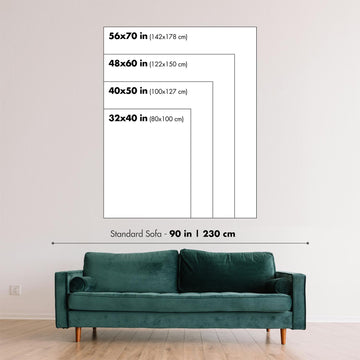
This map looks great at every size, but I always recommend going for a larger size if you have space. That way you can easily make out all of the details.
This map looks amazing at sizes all the way up to 100in (250cm). If you are looking for a larger map, please get in touch.
The model in the listing images is holding the 16x20in (40x50cm) version of this map.
The fifth listing image shows an example of my map personalisation service.
If you’re looking for something slightly different, check out my collection of the best old maps to see if something else catches your eye.
Please contact me to check if a certain location, landmark or feature is shown on this map.
This would make a wonderful birthday, Christmas, Father's Day, work leaving, anniversary or housewarming gift for someone from the areas covered by this map.
This map is available as a giclée print on acid free archival matte paper, or you can buy it framed. The frame is a nice, simple black frame that suits most aesthetics. Please get in touch if you'd like a different frame colour or material. My frames are glazed with super-clear museum-grade acrylic (perspex/acrylite), which is significantly less reflective than glass, safer, and will always arrive in perfect condition.
This map is also available as a float framed canvas, sometimes known as a shadow gap framed canvas or canvas floater. The map is printed on artist's cotton canvas and then stretched over a handmade box frame. We then "float" the canvas inside a wooden frame, which is available in a range of colours (black, dark brown, oak, antique gold and white). This is a wonderful way to present a map without glazing in front. See some examples of float framed canvas maps and explore the differences between my different finishes.
For something truly unique, this map is also available in "Unique 3D", our trademarked process that dramatically transforms the map so that it has a wonderful sense of depth. We combine the original map with detailed topography and elevation data, so that mountains and the terrain really "pop". For more info and examples of 3D maps, check my Unique 3D page.
Many of our maps and art prints are chosen as thoughtful gifts for homes, offices, studies and meaningful places.
Choose a framed option for the easiest ready-to-hang gift, or choose an unframed print if the recipient may prefer to select their own frame.
We make orders locally in 24 countries around the world, so gifts can often be produced close to the recipient. This helps them arrive faster, travel more safely, and avoid customs or import duty surprises.
- We can deliver directly to the recipient
- Framed pieces arrive ready to hang
- Unframed prints are carefully packed in a strong protective tube
- Almost every order is made locally, for faster, safer gifting
- 90-day returns give the recipient time to decide
If you are not sure what to choose, please contact us. We can help you pick the right map, size, finish or delivery option.
Most orders are made locally and delivered in around 2–3 working days, depending on the product, size and destination.
We print and frame maps and artwork in 24 countries around the world, so your order is usually made close to you or your recipient. That means faster delivery, less time in transit, and no customs or import duty surprises.
Personalised and customised pieces usually take an extra 1–2 working days, because we prepare your design and send it to you for approval before printing.
Very large framed orders can take a little longer, as they need extra care in production and delivery.
Every order is carefully packaged: unframed prints are sent in a strong protective tube, while framed pieces are securely packed with protective materials around the frame.
If you need your order by a particular date, please contact us before ordering. We’ll check the best production route and delivery option for your location.
Express delivery is available at checkout for most countries. Next-day delivery is available in the UK, US, Singapore and the UAE.
Your order is covered by our 90-day returns policy and 10-year guarantee.
Our standard frame is a gallery-style black ash hardwood frame, with a simple, modern look. It is approximately 20mm (0.8in) wide. You can also view some lovely customer photos of framed maps and art.
We use super-clear acrylic glazing, also known as Perspex or Acrylite, instead of traditional glass. It is lighter, safer, and has lower reflectivity, giving the artwork a clearer, cleaner appearance.
Six standard frame colours are available at no extra cost: black, dark brown, dark grey, oak, white, and antique gold. Custom framing and mounting/matting is also available for customers looking for something more specific.
Most maps, art prints, and illustrations are also available as a framed canvas. We use matte cotton canvas, stretch it over a sustainably sourced wooden box frame, and then float the piece within a wooden outer frame. The finished result is beautifully presented, with no glazing between you and the artwork.
All frames are supplied ready to hang, with either string or brackets fitted to the back. Very large frames will include heavy-duty hanging plates and/or a mounting baton. If you have any questions, please get in touch.
We can also supply old maps and artwork on canvas, foam board, cotton rag, and other materials.
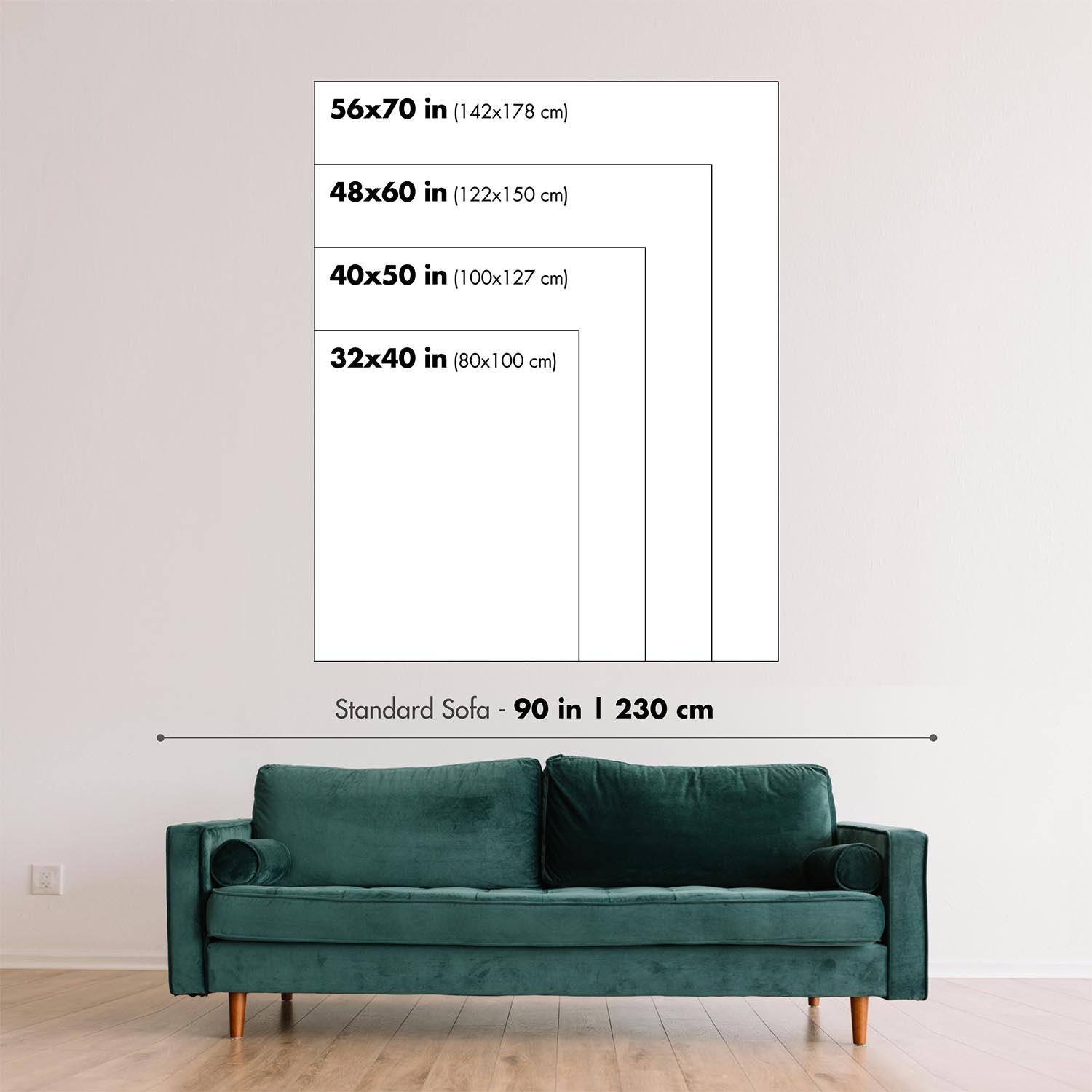
If you would prefer to frame your map or artwork yourself, please read our size guide before ordering.
We work with interior designers, hospitality businesses, property professionals, offices and corporate buyers on individual pieces and larger coordinated projects.
This map can be adapted for a particular wall, room or project, and our workshop can help coordinate the dimensions, material and framing before production.
- Exact, oversized and made-to-measure dimensions
- Custom framing, mounting and alternative materials
- Coordinated pieces for several rooms or locations
- Map personalisation, to mark important locations or add extra details
- Map and framing guidance from our workshop
- Local production for projects around the world
Every Unique Maps piece begins with an authentic cartographic source or an original design from our London studio.
For our historic maps, we source rare originals from libraries, archives, auction houses and private collections around the world. We carefully restore each map for print—repairing age-related damage, balancing colour and improving clarity while preserving its original detail, texture and character.
Once restored, the map is prepared for your chosen size and finish. Your piece is then printed and, where selected, framed close to its delivery destination.
Our map prints use acid-free 200gsm archival matte paper and fade-resistant pigment inks, creating a rich, non-glossy finish designed to last. Framed maps use crystal-clear optical acrylic and arrive ready to hang.
Canvas, cotton-rag and other specialist presentations are also available. Learn more about our materials and finishes.
Personalising your map
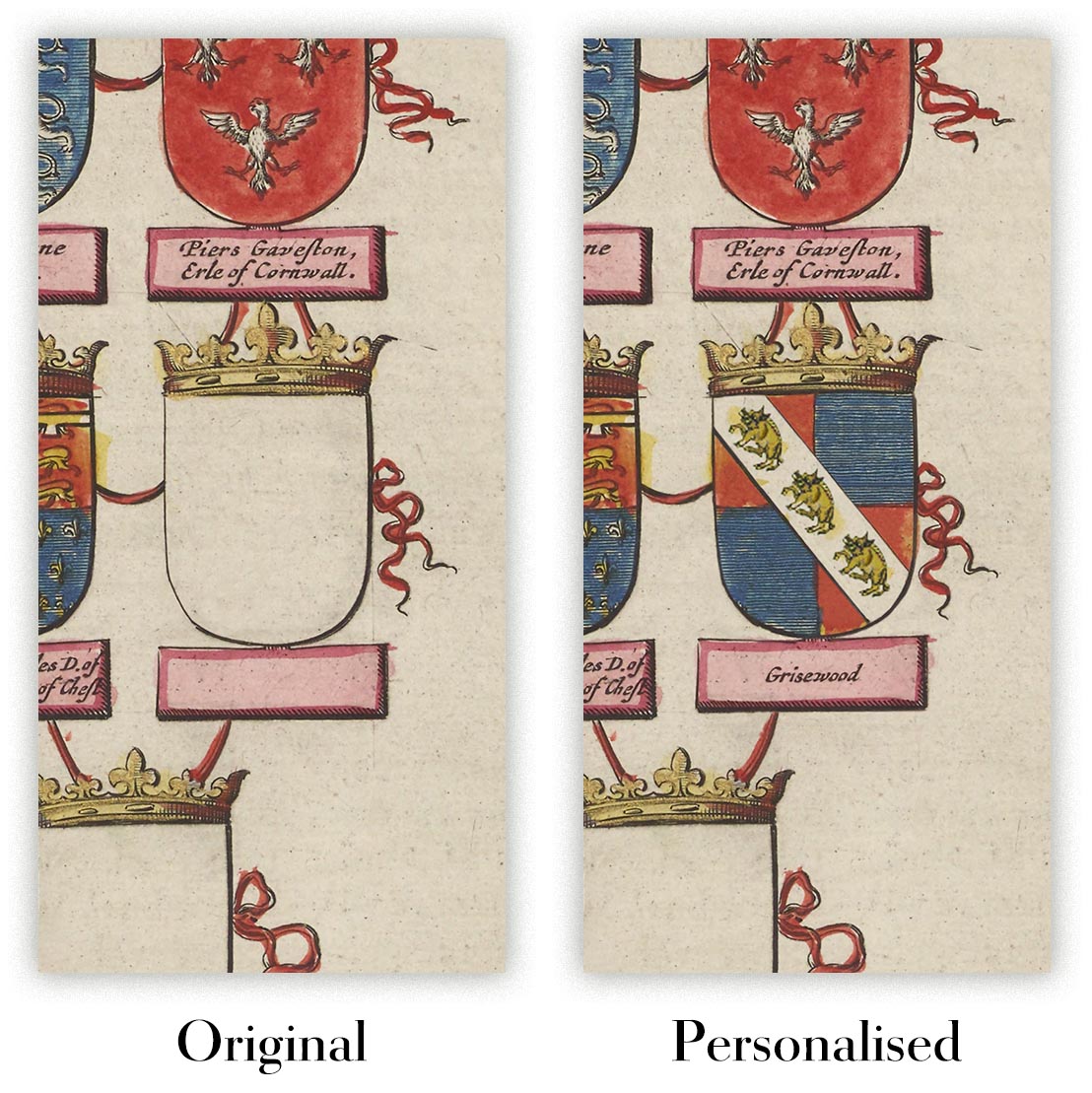
You can add a short title or dedication, mark one meaningful place, or request one considered visual detail. For personalised designs, we send a proof before printing and you can request changes before approval.
For more complex bespoke commissions, contact our design team.
Original or Aged
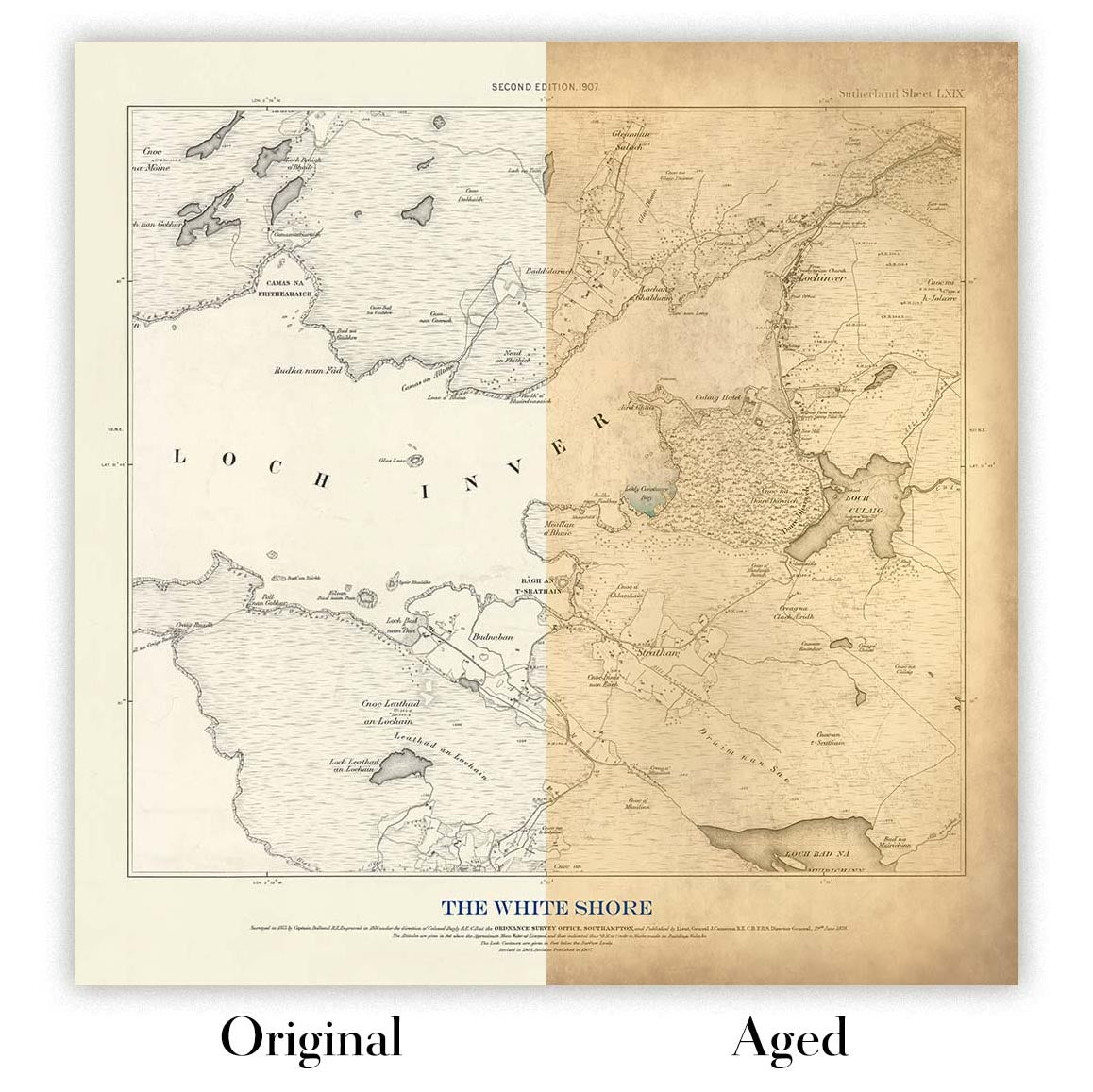
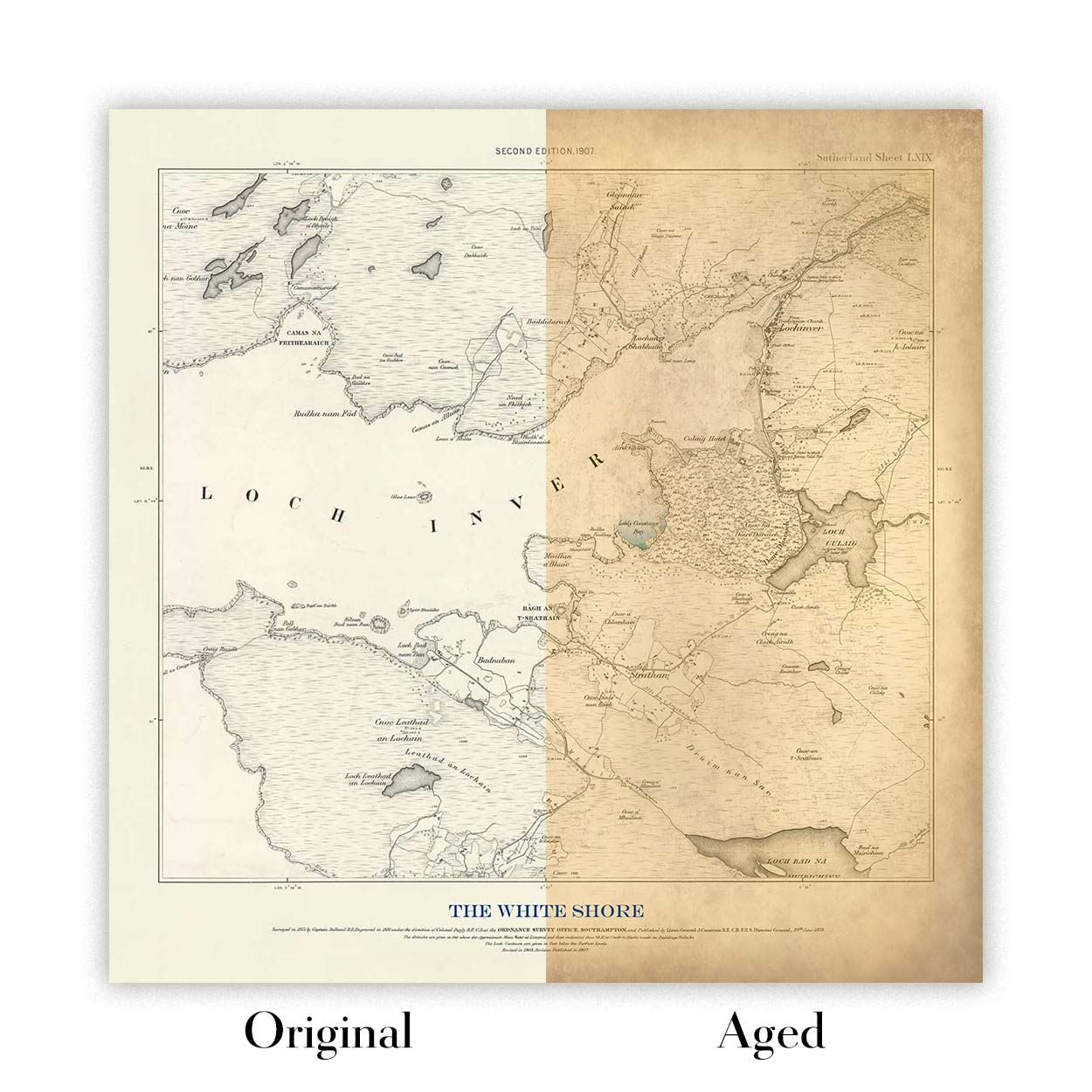
Choose Original for true-to-source colour, or Aged for a warmer, richer antique character created with our specialist ageing process. See examples of our Aged maps.
We’ve been restoring and producing maps and art prints since 1984, and we stand behind every piece.
Every order is covered by our 10-year guarantee and damage-free delivery guarantee. If your piece arrives damaged, we’ll replace or remake it free of charge. If anything else isn’t right, contact our workshop team and we’ll put it right promptly.
See our returns and refund policy for full details.
Or try searching for something!


